
Previous Church of England moves to withdraw investments linked to illegal settlements, Synod says
By Rifat Odeh Kassis
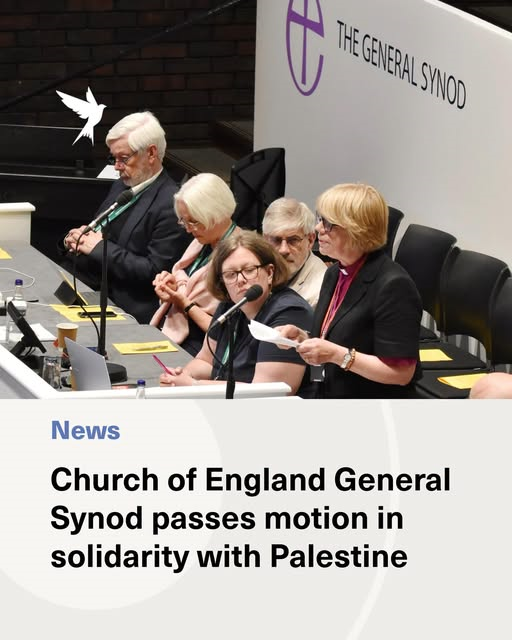
In July 2026, the General Synod of the Church of England voted to listen to Palestinian Christians and study the Kairos Palestine II document.
Instead of a normal theological debate, it triggered an unprecedented wave of pressure and objections—driven by Christian groups alongside Zionist Jewish organizations.
That reaction is hard to square with what the decision actually does. The resolution was limited and balanced. It did not impose boycotts. It did not punish anyone. Yet the campaign that followed was fierce, coordinated, and unusually loud.
So the real question is unavoidable: Why was this decision met with escalation? And why does it attract such attention when other churches in Europe and the United States have acted far more aggressively—without triggering the same level of fury?
Here are the clearest explanations, as I see them.
1) Because the Church of England carries political and symbolic weight
The Church of England is not just another church. It is the established church, tied to the nation’s constitutional identity and led within the wider framework of the monarchy. It also influences Anglican life globally and remains deeply present in British public culture.
When it speaks—especially on Palestine—its words do not stay inside church walls. They become signals. They become leverage. And they become headlines.
2) Because the timing changed everything
This debate came nearly three years after the war in Gaza, after language that Kairos II used—genocide, ethnic cleansing, colonial occupation—became harder for the public to dismiss. More churches, universities, and humanitarian bodies were willing to name what was happening rather than wrap it in softer terms.
When the broader climate shifts, opponents can no longer rely on the old playbook. They can’t simply argue past the moment. They have to fight harder—faster—louder.
3) Because Kairos II isn’t only an action plan—it’s a theological challenge
Earlier Kairos documents often urged churches toward specific policies: divestment, boycotts, a ceasefire, humanitarian support, “come and see” delegations.
Kairos II is different. It doesn’t just ask for steps—it offers a Palestinian Christian theological narrative. It forces churches to confront how they interpret Scripture and how they understand “Christian witness” under occupation, genocide, and Christian Zionism.
That kind of engagement doesn’t fade quickly. Once a church studies a theological document, it shapes preaching, teaching, clergy formation, and future positions. That’s why this battle matters.
4) Because Kairos Palestine is becoming hard to ignore
The intensity of the backlash itself tells a story. Organizations did not flood the process with petitions, statements, threats, and intimidation unless they believed the document could move something real.
The campaign suggests they feared that Kairos II might travel beyond the Church of England. Once one major church takes Kairos seriously, others may follow. Ecumenical networks spread ideas. Policies echo across denominations. Stopping the first step is easier than managing the spread afterward.
The resolution the Synod landed on was carefully revised and framed. It included commitments to interfaith dialogue and explicit rejection of antisemitism and hatred toward Muslims.
So why all the heat? Because the conflict was not mainly over wording. It was over who gets authority inside churches to name what Palestine means morally and theologically.
Many critics didn’t focus on the resolution’s balance. They focused on Kairos Palestine itself—repeating one clear message: don’t receive this document, don’t treat it as a legitimate Christian voice, don’t give it a home in church life.
That’s the point. The goal wasn’t only to stop a vote. It was to prevent Kairos Palestine from gaining ecclesiastical credibility—from becoming a reference point that churches take seriously.
What happened in the Church of England wasn’t just disagreement over paperwork. It revealed a deeper struggle over interpretation—over who has the right to shape how churches understand the Palestinian reality.
And the scale of the backlash shows something else too: Kairos Palestine is no longer marginal. It’s becoming influential enough that opponents feel compelled to challenge its legitimacy before it grows further.
That is why the response was not proportional. That is why it was so loud. And that is why the decision to listen to Palestinian Christians was treated like a threat.
Rifat Kassis, a renowned Palestinian Christian activist and advocate who has spent the past several decades campaigning for human rights in Palestine and around the world


تكافح مجلة “ملح الأرض” من أجل الاستمرار في نشر تقارير تعرض أحوال المسيحيين العرب في الأردن وفلسطين ومناطق الجليل، ونحرص على تقديم مواضيع تزوّد قراءنا بمعلومات مفيدة لهم ، بالاعتماد على مصادر موثوقة، كما تركّز معظم اهتمامها على البحث عن التحديات التي تواجه المكون المسيحي في بلادنا، لنبقى كما نحن دائماً صوت مسيحي وطني حر يحترم رجال الدين وكنائسنا ولكن يرفض احتكار الحقيقة ويبحث عنها تماشيًا مع قول السيد المسيح و تعرفون الحق والحق يحرركم
من مبادئنا حرية التعبير للعلمانيين بصورة تكميلية لرأي الإكليروس الذي نحترمه. كما نؤيد بدون خجل الدعوة الكتابية للمساواة في أمور هامة مثل الإرث للمسيحيين وأهمية التوعية وتقديم النصح للمقبلين على الزواج وندعم العمل الاجتماعي ونشطاء المجتمع المدني المسيحيين و نحاول أن نسلط الضوء على قصص النجاح غير ناسيين من هم بحاجة للمساعدة الإنسانية والصحية والنفسية وغيرها.
والسبيل الوحيد للخروج من هذا الوضع هو بالتواصل والنقاش الحر، حول هويّاتنا وحول التغييرات التي نريدها في مجتمعاتنا، من أجل أن نفهم بشكل أفضل القوى التي تؤثّر في مجتمعاتنا،.
تستمر ملح الأرض في تشكيل مساحة افتراضية تُطرح فيها الأفكار بحرّية لتشكل ملاذاً مؤقتاً لنا بينما تبقى المساحات الحقيقية في ساحاتنا وشوارعنا بعيدة المنال.
كل مساهماتكم تُدفع لكتّابنا، وهم شباب وشابات يتحدّون المخاطر ليرووا قصصنا.