Previous Arabs and Palestinian evangelicals totally reject Huckabee’s outrageous statement
by Daoud Kuttab
Please read below a compilation of reactions by Palestinian Christians to the Iran war
Rev. Boutros Mansour – General Secretary of the World Evangelical Alliance
Regardless of our stance on the Iranian regime, which has committed many atrocities against its own people and in its foreign policy, I don’t believe that countries should have the freedom to attack other countries as they see fit. Attacks by one country against another should not occur without international legitimacy from the United Nations.
Of course, we grieve for the many lives lost. We do not want war. Our God is the God of peace, and His name is the Prince of Peace. He says, “Blessed are the peacemakers.” We grieve for war and pray for peace and prosperity throughout the region, and that we will not be constantly preoccupied with periods of war and disruption that claim innocent lives, cripple the economy, and cause psychological and physical suffering to all the people in the region.
We pray for peace, for calm to prevail, and for matters to be resolved peacefully. All of this, of course, is regardless of our stance on the Iranian regime, which is a negative one.
Bishop William Shomali: The War is a Continuation of Unending Suffering
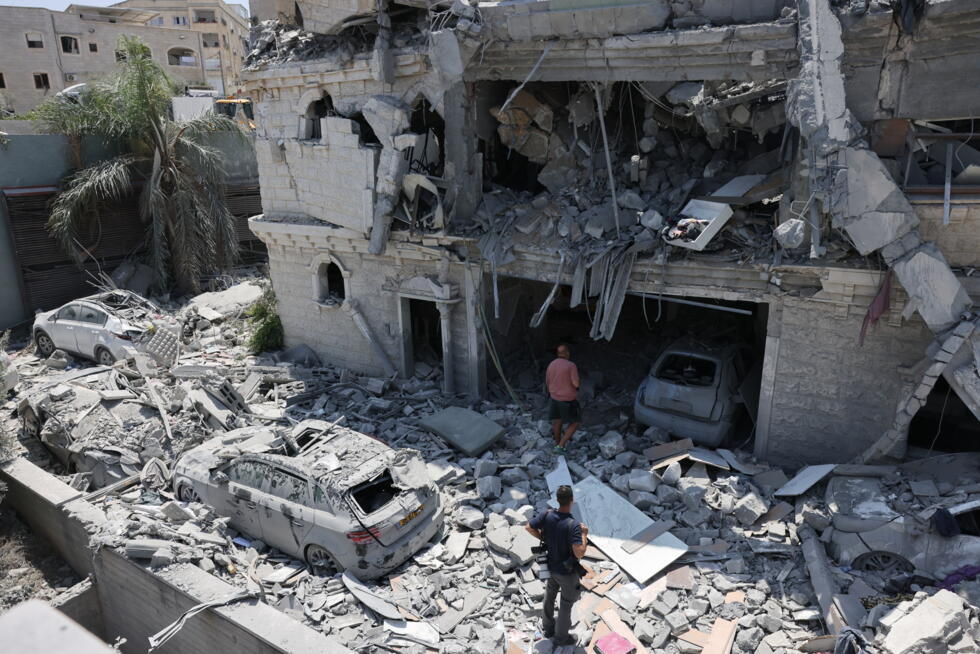
Bishop William Shomali, the Latin Patriarchal Vicar General, affirmed that what Palestinians, in all their diversity, are experiencing today is an extension of a long war that has not truly ended since October 7, 2013. He explained that the current war is not an isolated event, but rather a new link in a chain of political and security repercussions that have cast a heavy shadow over Palestinian society. He pointed out that the most prominent of these repercussions are the worsening rates of poverty and unemployment, along with the growing fear of the future.
He indicated that the continued state of political and security instability directly impacts people’s daily lives and deepens the economic and social crises, leaving the Palestinian citizen in a state of constant exhaustion, both psychologically and materially.
Father Bassam Shahatit: Christian Teachings Reject War and Call for Peace
Archimandrite Dr. Bassam Shahatit, Vicar General of the Melkite Greek Catholic Church in Jordan, affirmed in a statement to milhilard.org that the Christian stance on wars and violence is based on the teachings of the Holy Bible and the message of Jesus Christ, which are founded on peace, love, and mercy. He explained that Christianity stands against war, killing, displacement, and violence, and emphasizes the defense of human dignity without any discrimination, because all people are equal before God, and aggression against a person cannot be justified because of differences.
He pointed out that resolving conflicts is not achieved through the language of force and weapons or the logic of control and power, but rather through dialogue, understanding, and the pursuit of a just peace that achieves stability, especially in the Middle East region, which suffers from ongoing crises. He added that the true Christian message is based on service, humility, and peacemaking, citing the words of Jesus Christ: “Blessed are the peacemakers, for they will be called children of God.”
Father Shahtatit warned against exploiting religion to justify political interests or spread hate speech, emphasizing that evil must be countered with good to break the cycle of violence. He concluded by praying that wars would cease, that peace and justice would prevail in the region, and that God would protect Jordan and its leadership and grant it continued security and stability.
Father Paul Haddad: War is a destructive act… and peace is God’s path
For his part, Archimandrite Paul Haddad, a priest in the Melkite Greek Catholic Archdiocese of Jordan and pastor of St. George Church in Fuheis, emphasized that the Church’s position is clear in its call for peace. He affirmed his support for the Church and the voice of His Holiness Pope Leo XIV in spreading peace and security among peoples, especially in the Middle East.
In his statement to Salt of the Earth, he said: “Those who support war are supporting a destructive path, while those who call for peace and stability are walking in the path of God, who desires nothing but love in everyone’s hearts.”
He stressed that returning to the negotiating table has become an urgent necessity, especially during this sensitive period the region and the world are going through. He emphasized that violence only begets violence, and wars leave behind nothing but destruction and tragedy.
Reverend Nabeeh Abbasi: Prioritizing Peace and Working to Protect Civilians and the Innocent
Reverend Dr. Nabeeh Abbasi, head of the Baptist Convention in Jordan, expressed his opposition to wars, violence, and bloodshed anywhere, emphasizing that human dignity and the lives of innocent people must remain above all political or military conflict. In this context, Reverend Abbasi condemns the unjustified attack targeting Jordan and neighboring countries, affirming that Jordan’s security, stability, and sovereignty are inviolable. He also expresses his appreciation for the wise and unique leadership of King Abdullah II and for Jordan’s unwavering role in safeguarding its sovereignty and defending its security and stability, while maintaining its well-known approach of striving for peace and stability in the region. At the same time, Reverend Abbasi stresses the necessity of prioritizing peace, working to protect civilians and the innocent on both sides of the conflict, and calling for an end to violence and a return to dialogue as the only way to spare the peoples of the region further suffering. He concludes by calling for prayers for peace, for God to protect Jordan and the peoples of the region, and for justice and mercy to prevail instead of wars and destruction.
Youssef Daher – Director of the Jerusalem Center for Church Relations
We ask God: Why does war plague our land and our people? Wars in which we have no stake. The cross upon our people does not divide us. We suffer, we are wounded, and those among us who are martyred die in the hope of the resurrection. O Lord, we ask for justice and truth to end these wars and lift the oppression and tyranny from those who are martyred in the name of Your book.
Wadia Abu Nassar – Christian activist from Haifa
Since the beginning of the war, my family and I have prayed, and continue to pray daily, asking for heaven’s mercy to deliver us from the madmen, the thugs, the criminals, and the politicians who think more about their own personal fate than about seeking peace and stability.
Some may say that the situation is a cause for concern, and this is true. However, we insist that after death there is resurrection, and that war is not our destiny. Rather, peoples must learn how to coexist in peace and mutual respect, for we have one Heavenly Father, and there is room for everyone on Earth.
We will continue to pray for peace throughout the world, and especially in our region, tirelessly and without wavering. We will not succumb to the logic of war, no matter how loud its voice or how tyrannical its whip.
George Sahhar – Palestinian from Jerusalem, Advocacy Expert
War on Iran is bad news for everyone except Israel. The United States, despite its military and tactical superiority, is repeating its mistake and sin in Iraq, but on a much larger scale. The Arabs are the losers, as this war deepens their weakness and defeats, which will in turn awaken new radical forces in a way we have never seen before, as a reaction to the unprecedented collapse of Arab national security and its subservience to external powers.
As for the Palestinians, they must forget the possibility of an Israeli withdrawal and the establishment of an independent Palestinian state in the foreseeable future, despite the clarity now prevailing among Arab and Muslim peoples and globally regarding this just cause.
As for the Israeli entity, the dream of Greater Israel is progressing apace and, from their perspective, quite well. The crucial question is: What have we prepared for the future? The answer: Nothing to protect our national security and strengthen our sovereignty and independence.
Lily Habash – Expert in Post-Conflict Governance – Jerusalem
It is not easy to write amidst this insane war raging in Iran, which seems like a continuation of the genocide and ethnic cleansing being witnessed throughout Palestine. It is clear that this war targets the very core of our existence today, especially for us Palestinians, who seem destined to confront this evil scheme.
We have experienced a catastrophe that no historical or logical explanation can do justice to. As an academic and practitioner, I have struggled to adapt my writing to the task; I am unable to decide whether to interpret current events or predict the future, given the overwhelming evidence of the Israeli expansionist project.
This is also due to the conflict between my rational thinking and my Christian faith. The reality is that the general conditions, not only in Palestine or the Middle East, but throughout the world, indicate that we are living in an era dominated by evil. It is difficult to imagine that all of this is mere coincidence; rather, it is the result of a complex scheme that renders ordinary people helpless and hopeless, and the more one tries to challenge it, the more brutal it becomes.
I also struggle to understand my Christian faith, which is based on the doctrine of hope. How can we understand God’s will for our present and future? And how can we be certain that the promises of salvation, justice, and the restoration of the world are within our grasp on this earth?
I cannot pretend that my complete submission to God’s will is a given; I pray to God daily for answers, and I try to reconcile my rational thinking with my Christian faith.
I know that I am not alone in this struggle, and it does not seem that we will have clear answers anytime soon. The only thing I realize now is that we need to persevere and move forward without hesitation, even as individuals, in the absence of clear political and spiritual leadership, not only in our region but globally.
Until miracles occur and a collective solution is found, we must continue striving to live as human beings.
Christians must be careful not to respond in ways that contradict the spirit of Christ. We should not reduce a complex and tragic conflict to a simplistic “good versus evil” narrative that allows us to cheer destruction or justify the suffering of civilians. War is never abstract; it involves real people made in the image of God in Tehran, Tel Aviv, and countless others across the region who live in fear of retaliation and loss. Christians should not allow fear, nationalism, or political allegiance to shape their theology, nor should we spiritualize military action as though God automatically stands behind one nation’s weapons. We must resist inflammatory rhetoric, careless social media pronouncements, and language that dehumanizes “the other.” Instead of praying only for our preferred leaders or desired outcomes, we are called to intercede for all who suffer and for wisdom among those in authority. Above all, Christians must not lose compassion. The call of Jesus to love enemies, to bless rather than curse, and to pursue peace remains binding even and especially in times of war.
Fadi Abu Saada – Beit Sahour
Palestinian Arab Christians continue to pay a heavy price due to the ongoing wars in the region. Shortly after the war in Gaza came the war on Iran, followed by the closure of airports and airspace, which meant the cessation of tourism, which had not yet fully recovered, and on which the Christians of Bethlehem, in particular, depend.
In addition, Christian workers are prevented from entering Jerusalem and Israel for work. The most significant issue, however, is emigration, with numbers increasing dramatically in search of a life of dignity and humanity, which no longer exists in Palestine.
Bethlehem is under a severe siege, compounded by a new settlement already established on Beit Sahour land, known as the “Shepherds’ Field,” which prevents urban expansion from the only available access point to the city: the east. If the war lasts a long time, it will mean a significant increase in poverty and need for the already exhausted people of Bethlehem.
– Professor Salim J. Munayer–Regional Coordinator for the Peace and Reconciliation Network (PRN) in the Middle East and North Africa (MENA)
Before and during the recent attack on Iran and the widening regional escalation, I received numerous social media posts from Christians some advocating for an attack on Iran, others expressing one-sided support either for or against the Iranian regime, and still others opposing U.S. intervention. After the attack, the posts continued, ranging from expressions of joy to deep concern, fear, and condemnation. For this reason, I am writing this short message. Christians must be careful not to respond in ways that contradict the spirit of Christ. We should not reduce a complex and tragic conflict to a simplistic “good versus evil” narrative that allows us to cheer destruction or justify the suffering of civilians. War is never abstract; it involves real people made in the image of God in Tehran, Tel Aviv, and countless others across the region who live in fear of retaliation and loss. Christians should not allow fear, nationalism, or political allegiance to shape their theology, nor should we spiritualize military action as though God automatically stands behind one nation’s weapons. We must resist inflammatory rhetoric, careless social media pronouncements, and language that dehumanizes “the other.” Instead of praying only for our preferred leaders or desired outcomes, we are called to intercede for all who suffer and for wisdom among those in authority. Above all, Christians must not lose compassion. The call of Jesus to love enemies, to bless rather than curse, and to pursue peace remains binding even and especially in times of war.


تكافح مجلة “ملح الأرض” من أجل الاستمرار في نشر تقارير تعرض أحوال المسيحيين العرب في الأردن وفلسطين ومناطق الجليل، ونحرص على تقديم مواضيع تزوّد قراءنا بمعلومات مفيدة لهم ، بالاعتماد على مصادر موثوقة، كما تركّز معظم اهتمامها على البحث عن التحديات التي تواجه المكون المسيحي في بلادنا، لنبقى كما نحن دائماً صوت مسيحي وطني حر يحترم رجال الدين وكنائسنا ولكن يرفض احتكار الحقيقة ويبحث عنها تماشيًا مع قول السيد المسيح و تعرفون الحق والحق يحرركم
من مبادئنا حرية التعبير للعلمانيين بصورة تكميلية لرأي الإكليروس الذي نحترمه. كما نؤيد بدون خجل الدعوة الكتابية للمساواة في أمور هامة مثل الإرث للمسيحيين وأهمية التوعية وتقديم النصح للمقبلين على الزواج وندعم العمل الاجتماعي ونشطاء المجتمع المدني المسيحيين و نحاول أن نسلط الضوء على قصص النجاح غير ناسيين من هم بحاجة للمساعدة الإنسانية والصحية والنفسية وغيرها.
والسبيل الوحيد للخروج من هذا الوضع هو بالتواصل والنقاش الحر، حول هويّاتنا وحول التغييرات التي نريدها في مجتمعاتنا، من أجل أن نفهم بشكل أفضل القوى التي تؤثّر في مجتمعاتنا،.
تستمر ملح الأرض في تشكيل مساحة افتراضية تُطرح فيها الأفكار بحرّية لتشكل ملاذاً مؤقتاً لنا بينما تبقى المساحات الحقيقية في ساحاتنا وشوارعنا بعيدة المنال.
كل مساهماتكم تُدفع لكتّابنا، وهم شباب وشابات يتحدّون المخاطر ليرووا قصصنا.