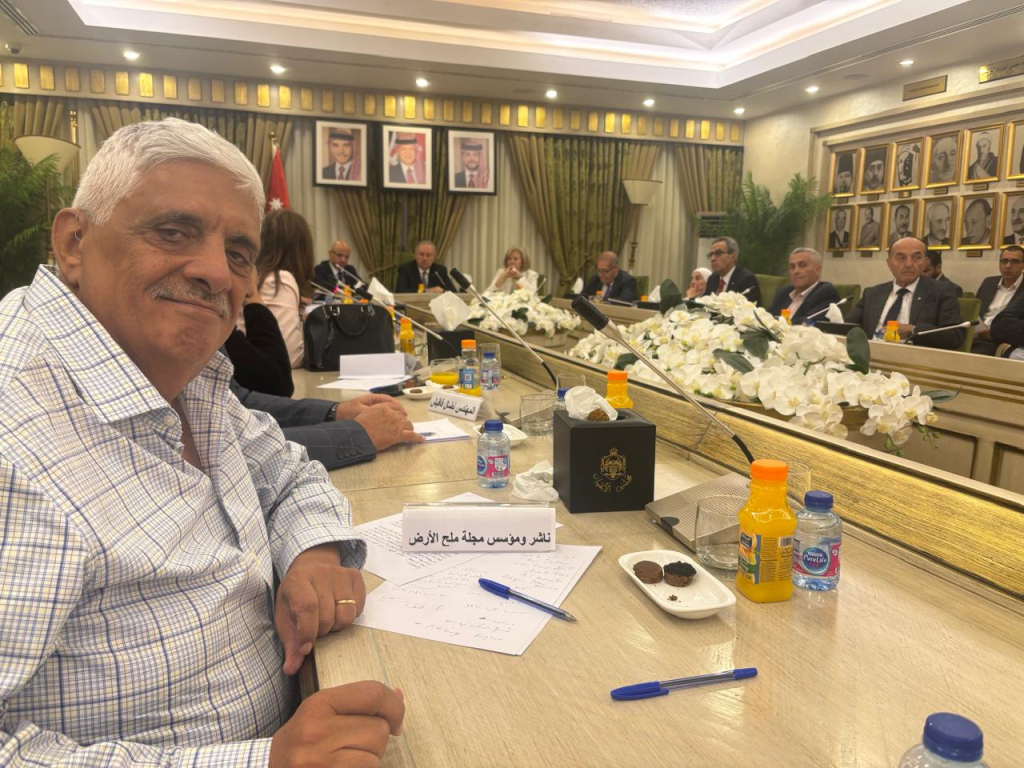
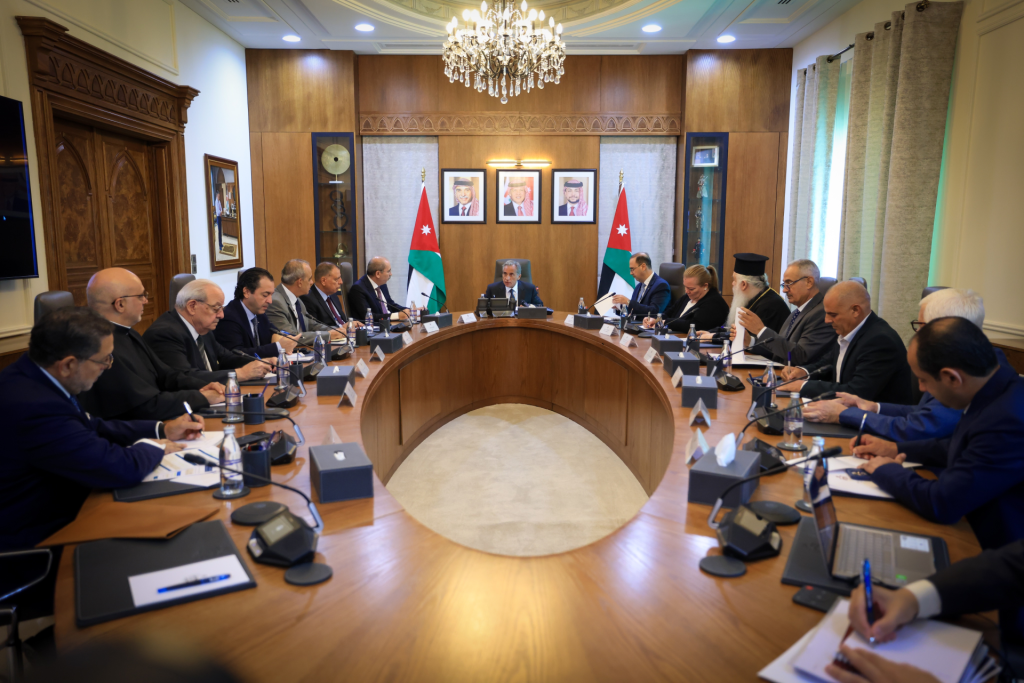
Previous The High-Level National Committee for the Baptism Site Millennium Celebrations Reflects High Official Interest
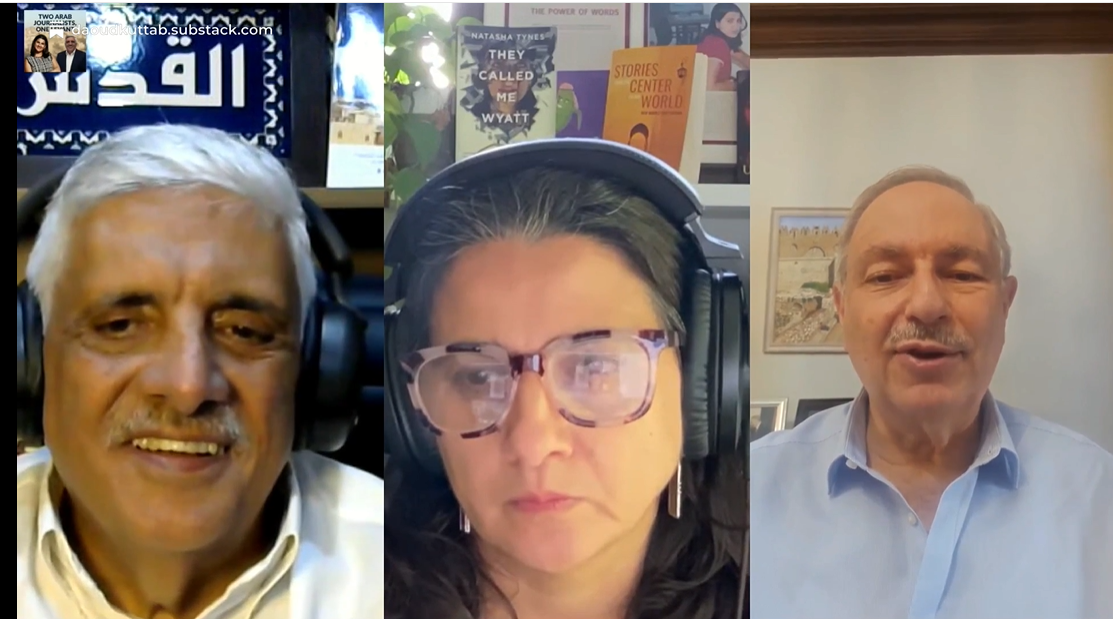
by Daoud Kuttab
Jordan is moving to formalize preparations for a religious milestone more than a decade in the making: the 2000-year anniversary of Jesus’ baptism in 2030. In a wide-ranging conversation on Two Arab Journalists, One Levant, hosted by Natasha Tynes and Daoud Kuttab, Jordanian Senator Michael Nazzal described what he called a turning point for planning at the baptismal site, the rationale behind the site’s Jordanian location, and the challenge of converting interest in “holy sites” into a repeatable pilgrimage experience.
Nazzal, chair of the Senate’s Tourism and Heritage Committee, praised the government’s latest step, saying it came as a result of calls from parliament. “Today the Prime Minister of Jordan has delivered a high committee.” He said the Prime Minister agreed to chair the body after lobbying within the Senate tourism framework. “After a lot of pushing from us at the Senate Tourism Committee, the Prime Minister decided to chair a new committee, a committee specifically for the 2030 special event for Jordan… for the world, for the Christian world.”
Nazzal framed the milestone not as a regional affair but a global one, describing it as a celebration of a central event in Christianity “which is the 2000-year celebration of the baptism of Jesus Christ.”
A key part of Nazzal’s argument centered on geography and on others’ attempts to “compete” for the story of Jesus’ baptism. “Jordan has the main site where Jesus was baptized by John the Baptist.” He said rival efforts were undermining Jordan’s position, but insisted that the historic record supports Jordan’s location. “
He also said that while people may have access to the river, the site itself and the river’s course have changed over centuries. “The Israelis have access to the river, but the site itself and the river were not there 2000 years ago.” “The river beds change locations,” he explained, adding that the Jordan River passed differently during the period when Christianity’s early churches were built. “And it passed actually on the Jordanian side… in front of one of the old churches in the site itself.”
Nazzal said the continuity of church construction on the Jordanian side strengthens the case. “Confirmed by the Vatican, by the Greek Orthodox Church, and by all other churches that have built new churches on the site itself. So yes, the baptism site is on the Jordanian side of the river.”
Senator Nazzal described the reality of early Christian persecution and exclusion. “2,000 years ago, Jesus was not welcome on the west side of the river or in Jerusalem. And that’s why all the old churches and all the antiquities that relate to Christianity started in Jordan and not in Palestine.”
Nazzal said the scope of the committee headed by the Prime Minister goes beyond physical development, even as he acknowledged construction is already underway. “I was with the Tourism Committee at the Senate last week at the baptism site, and the roads are being asphalted, the infrastructure is being built—so yes, there is a lot of work happening now.”
He argued that infrastructure alone cannot create meaningful pilgrimage. “I think we have to really talk again to the churches to see the rituals that will have to happen which will give pilgrims meaningful experience.”
Nazzal said Jordan must solve how to attract tourists to a religious experience rather than a casual visit. “…to attract tourists, not to come as a photo op and visit the Jordan River, which is sometimes muddy in winter. Or not very clear. And it’s a very small stream.” Instead, he said planners should design a “whole process” with defined steps. “So we have to create rituals at the baptismal site to really attract people to do those rituals and get certified and certificates for them to keep and show off and say we went. To where Christianity started.”
He said the effort should emphasize the broader history of Christianity rather than only the baptism event. “We’re not talking about the baptismal site. We’re talking about where Christianity was established.” An exhibit, the Dawn of Christianity, is due to open at the Bible Museum in the US capital in the spring of 2027.
Nazzal positioned the baptismal location as the “main” site, but not the only one a visitor should see. “So you have Mokawar, you have Ajloun, you have Mar Elias. There are other sites in Jordan. Those are sites to visit after the main site. The main site is where Christianity started.”
He said the baptism site is where God’s proclamation took place. “That’s where God spoke to the people and said, this is my beloved son. This is where it started. An “authentic” village—but with a modern pilgrimage logic”
Asked about planned development around the site—reported as an old-village-style environment—Nazzal said he could not speak for the project’s designers but described his own understanding of the goal: authenticity. “I saw the pictures, and I saw that it’s going to be very authentic. It’s going to try to keep the authenticity. They will try to make it as authentic as it was 2,000 years ago, yes.”
He also offered a reality check about the distance between ancient life and modern tourism. “But we know very well that 2,000 years ago, John the Baptist was eating locust and honey. So there were no shops, and there was no food.”
In discussing the difficulties facing Jordanian tourism, Nazzal tied Jordan’s tourism recovery efforts to larger perceptions of regional instability. He said that after the “war” and disruptions to travel routes, Jordan faces a reputational challenge—especially among Western visitors. He argued that even if conflict ends, the market needs reassurance.
He said the strategy is to pursue visitors less tied to Western flight patterns and to better package what Jordan offers. “It’s how we package it, how we coordinate the work using Royal Jordanian and the various locations around the world,” Nazzal said. Jordan’s visitor base includes Gulf and expatriate travelers, as well as Western tourists, and he argued that the Western segment has been hit harder in recent years.
He quantified the mix to explain how Jordan can recover even after disruption. “I wouldn’t say we lost all our tourism because 80% of our tourism is Gulf and expats coming back. But the 20% are what we lose.” He reiterated that the 20% segment—foreign tourists—drives much of Jordan’s tourism activity outside major hotel centers. “The rest of… restaurants outside Amman and Aqaba… tourism transport, guides, souvenir shops, handcrafts… they’re all dependent on those foreign tourists, 20% of the tourism sector.”
To reach new buyers, he said Jordan will expand airline routes and marketing toward Asia and Africa. “We will depend on Royal Jordanian opening new markets in Africa and in Asia, markets that are not that affected.” He listed target countries and markets. “The Indian market, to the Chinese market, to the Malaysian market, to the Indonesian market, to the Japanese market.” He suggested these markets are less influenced by short-term Western travel sentiment.
Nazzal singled out the United States as “lucrative” and said marketing must speak to broad Christian audiences—not just Catholics or a single denomination. “Marketing the baptismal site and Christianity and the Dawn of Christianity to all denominations is of utmost importance. We’re not talking to the Catholics in the US. We’re talking about museums, about Christianity. We’re not talking about specific religion.” He described Jordanian air service as enabling growth, noting that Royal Jordanian flies to multiple U.S. destinations. “Royal Jordanian now is flying to five destinations in the U.S.”
The Jordanian Senator added that the U.S. push should align with aircraft capacity. “Every aircraft going to any city in the U.S. is a full 24 hours… So you need one aircraft for every destination.”
In a portion of the interview framed as an address to church pastors in America, Nazzal emphasized Jordan’s openness and historic role in early Christianity. “Jordan is a very modern country, open to it. All religions, all denominations, without discrimination.” He recalled historical ties to the United States via air travel and framed early visitors as Christian pilgrims. “Our first tourists that came every year were Baptists and were Southerners and were people that came to visit the holy sites.” And he returned again to the geographic claim central to his case. “The holy sites. Christianity started on the east bank of the Jordan River.”
Nazzal said Christianity faced obstacles in what is now the West Bank and that, during Rome and Herod’s eras, Christianity’s early institutions were safer on Jordan’s side. “Christianity was not permitted in the West Bank, in Palestine… because they were afraid of Jesus Christ.”
In his closing themes, Nazzal portrayed Jordan’s 2030 committee as a mechanism for turning a one-time anniversary into a structured pilgrimage model—anchored in a specific historic site and supported by tourism planning, infrastructure, and church-led ritual. “…to create a whole process. So we have to create rituals… get certified and certificates… and say we went. To where Christianity started.” And, with Jordan’s reputation battered by years of conflict-related travel disruption, he argued that the anniversary will help rebuild demand—if packaged correctly and anchored in a visitor experience that moves beyond sightseeing. “It’s how we package it, how we coordinate the work…”


تكافح مجلة “ملح الأرض” من أجل الاستمرار في نشر تقارير تعرض أحوال المسيحيين العرب في الأردن وفلسطين ومناطق الجليل، ونحرص على تقديم مواضيع تزوّد قراءنا بمعلومات مفيدة لهم ، بالاعتماد على مصادر موثوقة، كما تركّز معظم اهتمامها على البحث عن التحديات التي تواجه المكون المسيحي في بلادنا، لنبقى كما نحن دائماً صوت مسيحي وطني حر يحترم رجال الدين وكنائسنا ولكن يرفض احتكار الحقيقة ويبحث عنها تماشيًا مع قول السيد المسيح و تعرفون الحق والحق يحرركم
من مبادئنا حرية التعبير للعلمانيين بصورة تكميلية لرأي الإكليروس الذي نحترمه. كما نؤيد بدون خجل الدعوة الكتابية للمساواة في أمور هامة مثل الإرث للمسيحيين وأهمية التوعية وتقديم النصح للمقبلين على الزواج وندعم العمل الاجتماعي ونشطاء المجتمع المدني المسيحيين و نحاول أن نسلط الضوء على قصص النجاح غير ناسيين من هم بحاجة للمساعدة الإنسانية والصحية والنفسية وغيرها.
والسبيل الوحيد للخروج من هذا الوضع هو بالتواصل والنقاش الحر، حول هويّاتنا وحول التغييرات التي نريدها في مجتمعاتنا، من أجل أن نفهم بشكل أفضل القوى التي تؤثّر في مجتمعاتنا،.
تستمر ملح الأرض في تشكيل مساحة افتراضية تُطرح فيها الأفكار بحرّية لتشكل ملاذاً مؤقتاً لنا بينما تبقى المساحات الحقيقية في ساحاتنا وشوارعنا بعيدة المنال.
كل مساهماتكم تُدفع لكتّابنا، وهم شباب وشابات يتحدّون المخاطر ليرووا قصصنا.