Previous Palestinian Police Arrest Three in Jenin Church Attack; Community Relights Christmas Tree in Unity
by Rev. Dr. Jack Sara*
credit: come and see
In his recent Christmas greeting, Israeli Prime Minister Benjamin Netanyahu spoke warmly of Christians in the Holy Land, portraying Israel as a unique refuge where Christians thrive, while implying that elsewhere in the region, they live in constant danger. Such statements resonate powerfully with many Western Christians, particularly those already inclined to see the Middle East through a simple moral binary: safety under Israel, persecution everywhere else.
Yet these claims, while containing fragments of truth, tell only part of the story. And Scripture reminds us that half-truths are still untruths; they are almost a lie.
As Palestinian Christians, our response must not be defensive or reactionary. It must be prophetic—rooted in truth, moral consistency, and lived reality. The deeper concern is not one inaccurate claim, but a broader and troubling pattern: Christians are highlighted when they serve a political narrative, and ignored when they speak for themselves.
The prophet Amos warned ancient Israel: “You trample on the poor and force him to give you grain… therefore, though you have built stone mansions, you will not live in them” (Amos 5:11). God’s judgment was not about religious language, but about moral coherence—the gap between what is proclaimed and what is practiced.
When Christian suffering is selectively acknowledged in one context and dismissed in another—when repeated attacks on churches, the spitting on clergy, and the desecration of Christian cemeteries in Jerusalem are met with silence; when our own Evangelical Alliance Church in West Jerusalem was burned several years ago and no one was apprehended, nor were serious police efforts made to pursue accountability—while isolated incidents elsewhere are amplified and weaponized, we are not witnessing genuine concern for Christians. We are witnessing selective advocacy. More troubling still, this selectivity reveals a political message rather than a sincere expression of goodwill. It has little to do with wishing Christians a genuine Merry Christmas and everything to do with advancing a narrative in which Christian suffering is acknowledged only when it is useful
Netanyahu referenced the burning of a Christmas tree in Jenin as evidence of Christian vulnerability under Palestinian governance. The implication was unmistakable. Yet the facts tell a very different story.
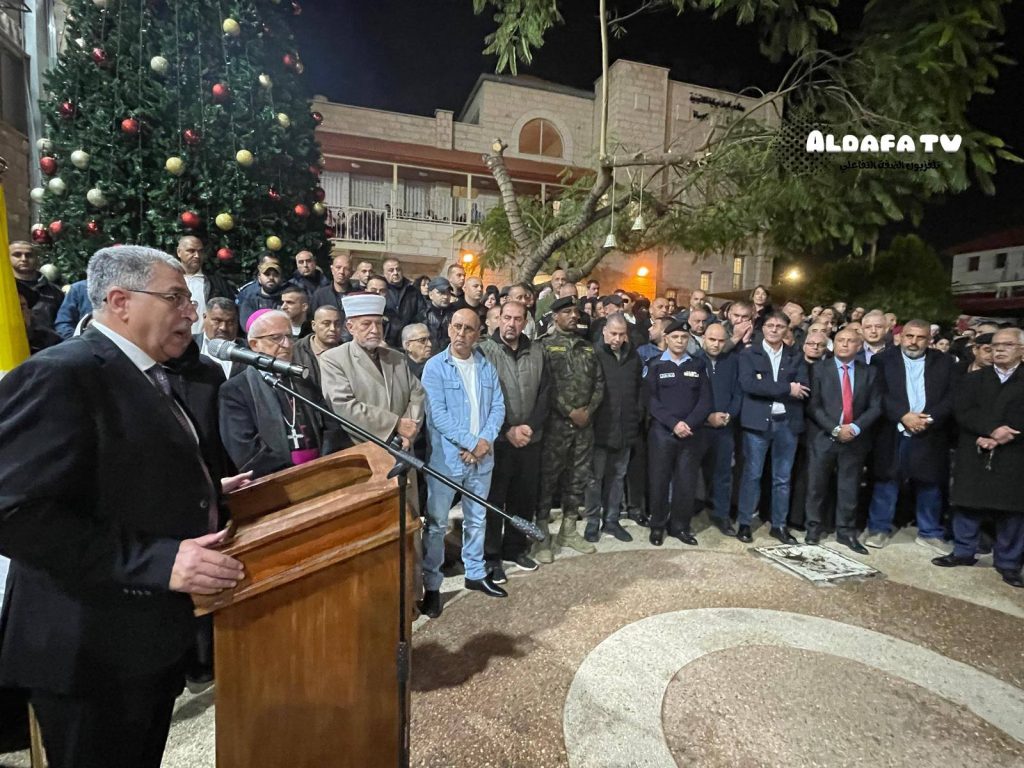
When the incident occurred, the perpetrator was immediately identified, arrested, and imprisoned by the Palestinian Authority. A new Christmas tree was erected and lit. The celebration continued in the presence of Christian clergy, Muslim religious leaders, civic officials, and representatives of the Palestinian Authority.
Rather than exposing religious intolerance, the incident demonstrated accountability, communal solidarity, and deeply rooted Muslim–Christian coexistence.
Palestinian Christians are not a fragile relic barely surviving on borrowed time. We worship freely, run schools and hospitals, lead churches and institutions, and contribute actively to public life. Our challenges are political, not religious, and are shared with our Muslim neighbors.
Beyond Palestine, the claim collapses further. In Egypt, the largest Christian population in the Middle East continues to worship openly and shape national life. In Lebanon, Christians are foundational to the country’s identity and leadership. In Jordan, Christians enjoy full citizenship, freedom of worship, and public participation. Even in the Gulf, churches operate openly and vibrant Christian communities gather weekly.
If Christian lives truly matter, then all Christian lives must matter. True solidarity listens before it speaks. True advocacy tells the whole story. True faith refuses to weaponize suffering.
Despite Netanyahu’s warm tone, this Christmas greeting is not an expression of genuine concern for Christians in the Holy Land. It is a political statement designed to reinforce a particular narrative, using Christians as symbolic proof while disregarding their lived realities and public testimonies. When faith is instrumentalized in this way, it becomes propaganda rather than truth.
We are not guests in this land. We are not political accessories. We are the descendants of the earliest followers of Jesus, bearing witness where the gospel was first proclaimed.
The question before the global Church is not where Christians thrive best, but whether it is willing to stand for truth with integrity—even when that truth complicates easy narratives.


تكافح مجلة “ملح الأرض” من أجل الاستمرار في نشر تقارير تعرض أحوال المسيحيين العرب في الأردن وفلسطين ومناطق الجليل، ونحرص على تقديم مواضيع تزوّد قراءنا بمعلومات مفيدة لهم ، بالاعتماد على مصادر موثوقة، كما تركّز معظم اهتمامها على البحث عن التحديات التي تواجه المكون المسيحي في بلادنا، لنبقى كما نحن دائماً صوت مسيحي وطني حر يحترم رجال الدين وكنائسنا ولكن يرفض احتكار الحقيقة ويبحث عنها تماشيًا مع قول السيد المسيح و تعرفون الحق والحق يحرركم
من مبادئنا حرية التعبير للعلمانيين بصورة تكميلية لرأي الإكليروس الذي نحترمه. كما نؤيد بدون خجل الدعوة الكتابية للمساواة في أمور هامة مثل الإرث للمسيحيين وأهمية التوعية وتقديم النصح للمقبلين على الزواج وندعم العمل الاجتماعي ونشطاء المجتمع المدني المسيحيين و نحاول أن نسلط الضوء على قصص النجاح غير ناسيين من هم بحاجة للمساعدة الإنسانية والصحية والنفسية وغيرها.
والسبيل الوحيد للخروج من هذا الوضع هو بالتواصل والنقاش الحر، حول هويّاتنا وحول التغييرات التي نريدها في مجتمعاتنا، من أجل أن نفهم بشكل أفضل القوى التي تؤثّر في مجتمعاتنا،.
تستمر ملح الأرض في تشكيل مساحة افتراضية تُطرح فيها الأفكار بحرّية لتشكل ملاذاً مؤقتاً لنا بينما تبقى المساحات الحقيقية في ساحاتنا وشوارعنا بعيدة المنال.
كل مساهماتكم تُدفع لكتّابنا، وهم شباب وشابات يتحدّون المخاطر ليرووا قصصنا.