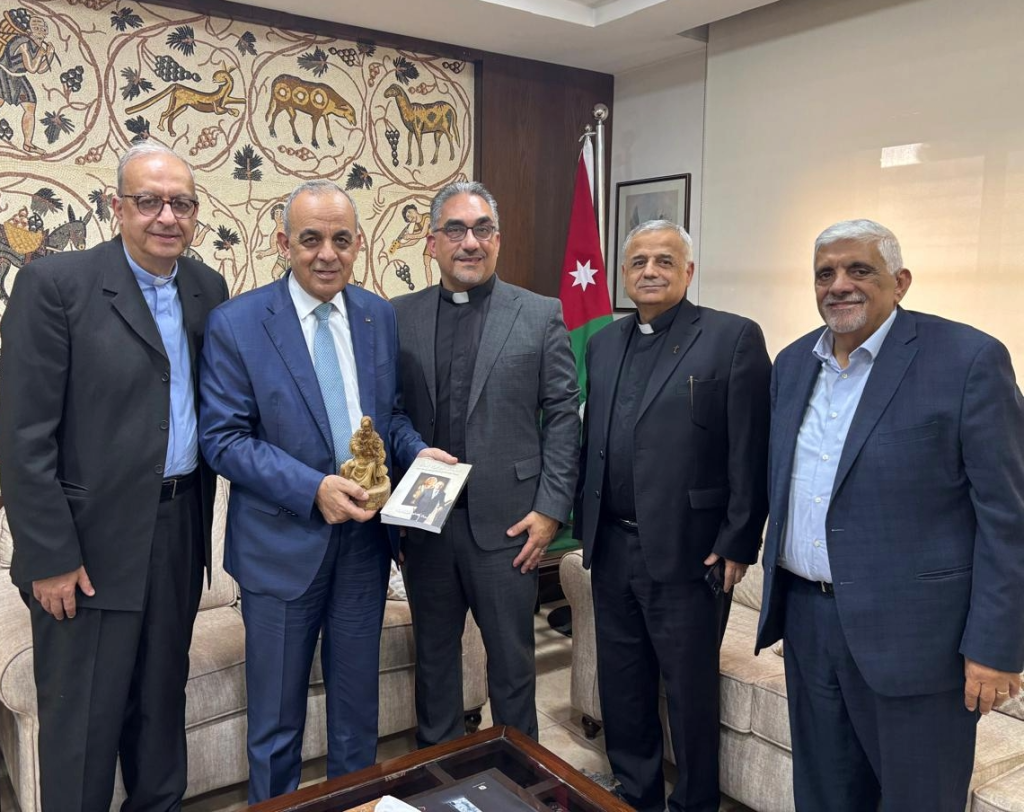
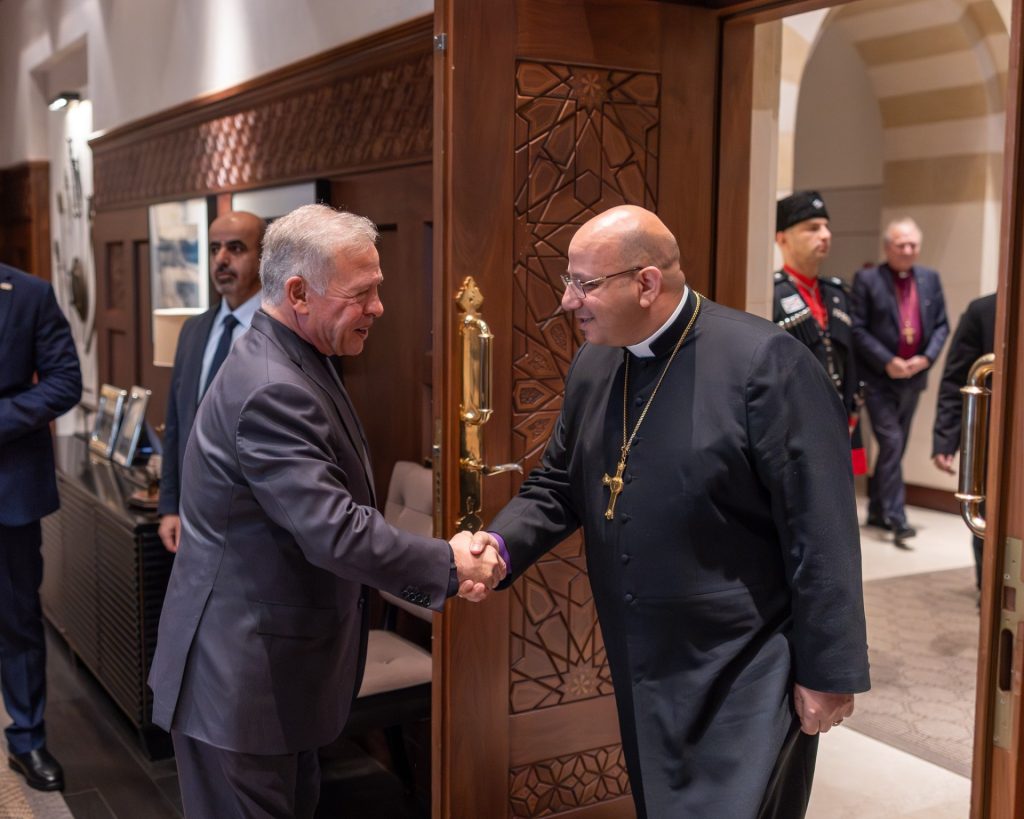
Previous King Abdullah II Meets Evangelical Lutheran Church Delegation, Reaffirms Support for Christian Presence in Jerusalem
Salim J. Munayer*
In recent weeks, many of us have received prayer emails and urgent intercessory appeals concerning unfolding events in places such as Venezuela and Iran. These messages often arise from sincere compassion and a genuine longing to see God’s mercy extended to people living under hardship, repression, or instability. I share that concern, and I pray with gratitude for the faithfulness of believers who refuse indifference in the face of suffering.
Yet as I have read and prayed through these requests, I have also felt a growing uneasy inner prompting that calls us, gently but firmly, to deeper discernment. Alongside heartfelt concern, I have encountered something else: Western political assumptions, media framing, and strategic narratives translated often unconsciously into the language of prayer.
This is not written as an accusation, but as a pastoral invitation to honesty. None of us prays from a neutral place. Our intercessions are shaped by our histories, our media environments, our political cultures, and our theological imaginations. At the same time, powerful political actors often aligned with dominant media are constantly shaping narratives: who is named as victim, who is labeled villain, and which futures are considered possible or legitimate. When these narratives go unexamined, they do not merely influence our opinions; they quietly form our prayers.
For global prayer communities such as the World Evangelical Alliance’s Peace and Reconciliation Network (PRN), cultivating a non-Western perspective, particularly one rooted in the Middle East and North Africa, is not optional. It is essential. Without it, prayer risks reinforcing the very systems of power and injustice it seeks to confront. This danger becomes especially acute when we pray for places like Gaza and Iran, where political reality, moral responsibility, and theological language collide with extraordinary intensity.
Why a Non-Western Lens Matters for Prayer
A non-Western perspective invites us to question assumptions often treated as universal in Western discourse: state sovereignty as absolute, liberal democracy as universally attainable, and security as the highest moral good. Instead, it foregrounds histories of empire, colonial partition, racialized governance, economic extraction, and unfinished decolonization.
From this vantage point, the Middle East is not primarily a region defined by “failed states” or “ancient hatreds,” but one shaped by ongoing imperial management and persistent struggles for dignity, land, and survival. Prayers that ignore this history risk becoming abstract or selective, expressing compassion while leaving untouched the frameworks that produce suffering.
Gaza: From Humanitarian Crisis to Moral Threshold
Gaza is often presented to the world as a humanitarian crisis, tragic, complex, and seemingly cyclical. Yet the reality we are confronting today exceeds the language of crisis or conflict. A growing body of legal, ethical, and theological reflection recognizes that what is unfolding constitutes genocide: not only mass killing, but the systematic destruction of a people’s conditions of life.
Theologically, Gaza exposes structural sin at genocidal intensity. The devastation of homes, hospitals, water systems, universities, and families follows a political logic in which Palestinian existence itself is rendered disposable. Siege, de-development, and racialized control converge into what can only be described as an economy of elimination. To pray for Gaza without naming this reality risks reducing genocide to tragedy and injustice to misfortune.
For prayer communities, Gaza has become a moral threshold. Neutrality is no longer possible. Silence becomes a form of consent. Even “balanced” language can function as a way of avoiding truth. In biblical terms, this is the moment when lament becomes resistance. Lament refuses erasure. It preserves memory. It names victims not as statistics, but as beloved lives. It confronts God and the world with the unbearable weight of injustice.
Iran: Beyond Simplistic Narratives
In many Western prayer appeals, Iran appears almost exclusively as an authoritarian threat, destabilizing, and dangerous. While Iran’s internal repression and political failures must not be minimized, a non-Western perspective insists that Iran be understood historically and structurally, not reduced to caricature.
Iran’s post-revolutionary reality has been shaped by foreign intervention, a devastating war, decades of sanctions, and prolonged regional isolation. Sanctions, in particular, function not only as economic pressure but as a form of collective punishment that reshapes society and empowers coercive institutions.
At the same time, Iran presents itself as a defender of the oppressed, especially Palestinians, framing its regional engagement in moral and religious terms. This posture should neither be dismissed outright nor romanticized. Iran operates within a fragmented regional order that severely limits its capacity to prevent atrocities such as the genocide in Gaza.
Faithful prayer must therefore hold tension without collapsing into slogans. We resist demonization without embracing idealization. We pray for justice without turning resistance into absolution. We name suffering without simplifying complexity.
When Prayer Becomes Political Without Knowing It
The problem is not that prayer is political. All prayer is political, because it imagines how power, justice, and hope should be ordered in God’s world. The danger lies in prayer that becomes politically driven without theological self-awareness. When we pray for stability without justice, peace without accountability, or “both sides” without naming power, we risk a form of theological quietism, mourning suffering while refusing to confront its causes.
Gaza exposes the limits of such prayer with devastating clarity.
Toward Faithful Prayer in a Time of Genocide
Gaza now stands as a defining site for theological reflection after genocide. Like other moments in history that shattered theological complacency, it demands a rethinking of reconciliation, resistance, and hope.
From Gaza, we learn that reconciliation without justice is false, peace without truth is violent, and prayer without moral clarity is empty. Faithful prayer in this moment must align itself unequivocally with life, dignity, and the refusal of annihilation. It must listen to voices from below, especially those who live under siege and erasure.
For PRN and other global networks, embracing a non-Western, Middle Eastern perspective with Gaza and Iran held honestly at the center can deepen prayer rather than politicize it. Such prayer does not instruct God according to our preferred narratives. Instead, it allows God to judge our narratives, reshape our imagination, and call us into costly solidarity.
In a world where power often masks violence with moral language, prayer must become the place where truth is spoken, lament is honored, and justice is not negotiable. This is not a call for partisan prayers. It is a call for biblical prayer shaped by lament, guided by the prophets, and centered on the crucified Christ.
May our prayers refuse silence.
May they resist injustice.
And may they reflect the heart of God who hears the cry of the suffering.
With hope and resolve,
Salim J. Munayer served as academic dean and professor at Bethlehem Bible College from 1989 to 2008. He is an adjunct professor at Fuller Theological* Seminary and The Hebrew University of Jerusalem.


تكافح مجلة “ملح الأرض” من أجل الاستمرار في نشر تقارير تعرض أحوال المسيحيين العرب في الأردن وفلسطين ومناطق الجليل، ونحرص على تقديم مواضيع تزوّد قراءنا بمعلومات مفيدة لهم ، بالاعتماد على مصادر موثوقة، كما تركّز معظم اهتمامها على البحث عن التحديات التي تواجه المكون المسيحي في بلادنا، لنبقى كما نحن دائماً صوت مسيحي وطني حر يحترم رجال الدين وكنائسنا ولكن يرفض احتكار الحقيقة ويبحث عنها تماشيًا مع قول السيد المسيح و تعرفون الحق والحق يحرركم
من مبادئنا حرية التعبير للعلمانيين بصورة تكميلية لرأي الإكليروس الذي نحترمه. كما نؤيد بدون خجل الدعوة الكتابية للمساواة في أمور هامة مثل الإرث للمسيحيين وأهمية التوعية وتقديم النصح للمقبلين على الزواج وندعم العمل الاجتماعي ونشطاء المجتمع المدني المسيحيين و نحاول أن نسلط الضوء على قصص النجاح غير ناسيين من هم بحاجة للمساعدة الإنسانية والصحية والنفسية وغيرها.
والسبيل الوحيد للخروج من هذا الوضع هو بالتواصل والنقاش الحر، حول هويّاتنا وحول التغييرات التي نريدها في مجتمعاتنا، من أجل أن نفهم بشكل أفضل القوى التي تؤثّر في مجتمعاتنا،.
تستمر ملح الأرض في تشكيل مساحة افتراضية تُطرح فيها الأفكار بحرّية لتشكل ملاذاً مؤقتاً لنا بينما تبقى المساحات الحقيقية في ساحاتنا وشوارعنا بعيدة المنال.
كل مساهماتكم تُدفع لكتّابنا، وهم شباب وشابات يتحدّون المخاطر ليرووا قصصنا.