
Previous Netanyahu’s Remarks on Jesus Christ Constitute a Grave Offense -statement
*By Rula Samain
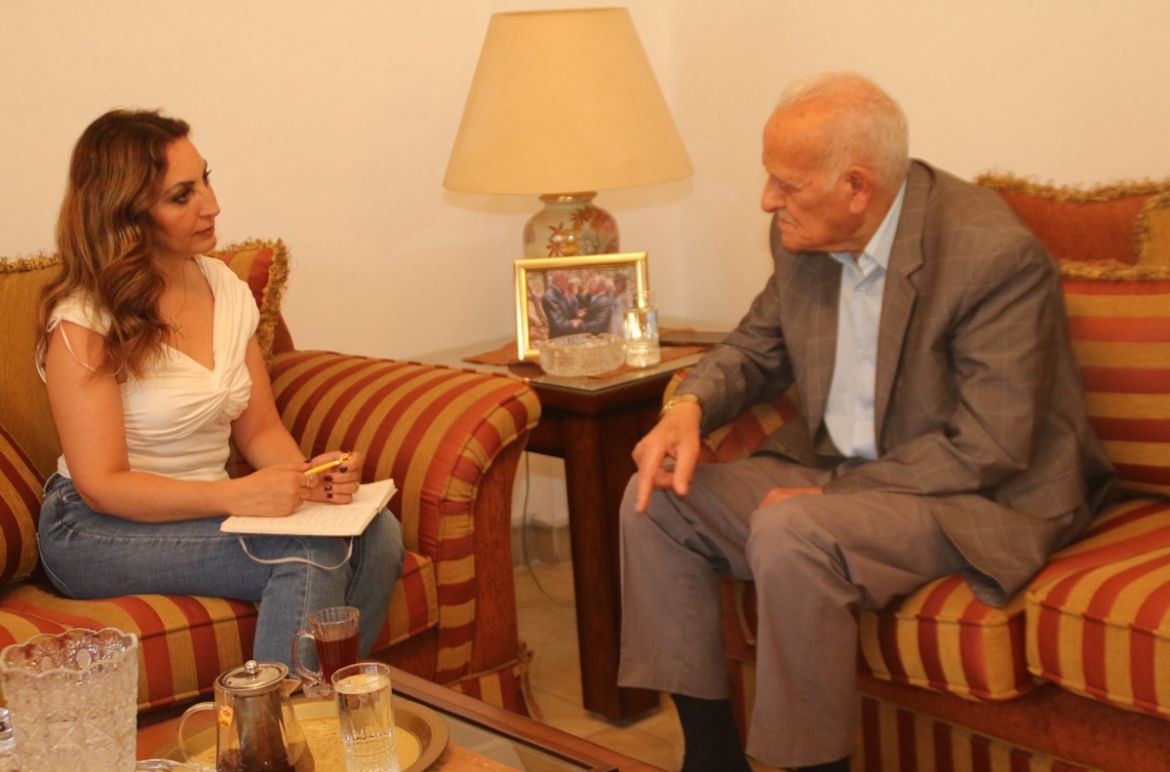
Lieutenant General (Ret.) Shafiq Ajilat does not narrate his career as a sequence of positions, but as a continuum of responsibility. In an exclusive interview, that will appear in an upcoming book th Ajilt mirrors, in many ways, the evolution of the Jordanian Armed Forces itself; his story is not constructed around visibility, but around continuity; not around moments of recognition, but around the quiet accumulation of duty.
Ajilat belongs to a generation of officers whose careers began in the post-1970s phase of institutional consolidation in Jordan, a period during which the military was not only strengthening its operational capacity, but also reinforcing its role as a central pillar of state formation.
Rising through the armored corps, one of the most strategically decisive divisions of the army, he would go on to serve as commander of an armored brigade in the early 1990s, at a time when regional volatility following the Gulf War required a level of readiness that extended beyond doctrine into lived, daily discipline.
Documented by jordanpolitics.org, assumed the position of Director of the Armored Corps, contributing to the development of training systems and operational frameworks that ensured institutional continuity within one of the military’s most critical combat arms.
Yet what emerges most vividly in his recollection is not the rank, but the formation.
Speaking of the early days of what would later become the 99th Armored Brigade, Ajilat recalls a period defined by endurance rather than structure.
“We were not building a unit on paper… we were building it in the field, in the desert, day and night,” he says.
The brigade, unnamed at the time, was shaped under conditions that left little room for abstraction. “We did not sleep… one had to stay ready, always ahead of what might come.”
In one incident, the camp came under direct fire. The response, as he describes it, was immediate and calculated, mechanized units mobilized, defensive positions reinforced, and control reasserted with precision.
Yet, the episode was not without cost.
A young officer was struck in an Israeli attack in the 1970s and later succumbed to his injuries, a loss that remains embedded in Ajilat’s memory not as an isolated event, but as part of the deeper fabric of command.
“Leadership is not rank… it is the ability to decide when it matters most,” he reflects.
The ethos that defines this experience extends beyond the battlefield.
At one point in the conversation, Ajilat reflected on a moment that captures the internal culture of the institution and its deeply rooted sense of duty.
“Let us not speak of financial matters…only that I am (always) ready,” he said, a response that reflects a broader doctrine within the Jordanian Armed Forces, where duty is not negotiated through material terms, but anchored in principle.
His later posting as military attaché in Beirut in the late 1990s placed him within a highly volatile regional environment, where the boundaries between diplomacy and security were often indistinct.
Operating under direct threat, Ajilat’s role extended beyond representation into the protection of Jordanian nationals and interests.
In one instance, following escalating tensions and direct risks to the embassy, his response was unequivocal, “even the slightest harm to a Jordanian citizen,” he emphasized, “would not be tolerated,” a statement, while brief, reflects a doctrine of state responsibility that extends beyond borders.
As noted in the archives of the Royal Hashemite Court, Ajilat’s service did not conclude with his military career. By Royal Decree under King Abdullah II, he was appointed to the Jordanian Senate, reflecting a well-established pattern within the Jordanian state, where senior military leadership transitions into legislative and advisory roles.
This continuity is not administrative; it is structural, ensuring that institutional memory remains embedded within the state rather than dissipating beyond it.
What is perhaps most analytically significant in Ajilat’s trajectory is what remains unspoken.
At no point does identity, religious or otherwise, emerge as a defining factor.
As a Christian officer, his presence within the military institution is neither framed as exceptional nor symbolic, rather, a reflection of a broader national framework in which citizenship precedes categorization.
This aligns with the constitutional guarantees enshrined in Articles 6 and 14 of the Jordanian Constitution (1952), which affirm equality before the law and the protection of religious freedom, and is consistently reinforced in the national discourse of King Abdullah II on coexistence and inclusive citizenship.
From a scholarly perspective, Ajilat’s career offers more than a biographical account; it provides a lens through which the Jordanian model of state formation can be understood that illustrates how national identity is operationalized through institutions, particularly the military, where inclusion is not rhetorical, but practiced.
The presence of Christian figures in senior military and state positions, therefore, does not represent a deviation from the system, but evidence of its internal coherence.
There is, throughout Ajilat’s narrative, a notable absence of dramatization. His account does not seek to elevate itself, nor to claim distinction, instead, it reflects a steady progression through responsibility, decision-making, and service. And it is precisely in that restraint that the deeper significance of the story emerges that the strength of a nation lies not only in its institutions, but in those who sustain them quietly, through discipline, continuity, and an unspoken understanding of what it means to serve.
He stands as one in a million; a true embodiment of integrity, unwavering loyalty, and principled leadership. His life reflects a deep love for his country, a steadfast commitment to its institutions, and a profound respect for the Jordanian Armed Forces to which he dedicated his years of service. In his conduct, discipline, and quiet sense of duty, Basha Shafiq Ajilat represents a distinguished military career, and model of character defined by honor, humility, and enduring national pride.
*Journalist and writer specialized in interfaith dialogues, peace and reconciliation


تكافح مجلة “ملح الأرض” من أجل الاستمرار في نشر تقارير تعرض أحوال المسيحيين العرب في الأردن وفلسطين ومناطق الجليل، ونحرص على تقديم مواضيع تزوّد قراءنا بمعلومات مفيدة لهم ، بالاعتماد على مصادر موثوقة، كما تركّز معظم اهتمامها على البحث عن التحديات التي تواجه المكون المسيحي في بلادنا، لنبقى كما نحن دائماً صوت مسيحي وطني حر يحترم رجال الدين وكنائسنا ولكن يرفض احتكار الحقيقة ويبحث عنها تماشيًا مع قول السيد المسيح و تعرفون الحق والحق يحرركم
من مبادئنا حرية التعبير للعلمانيين بصورة تكميلية لرأي الإكليروس الذي نحترمه. كما نؤيد بدون خجل الدعوة الكتابية للمساواة في أمور هامة مثل الإرث للمسيحيين وأهمية التوعية وتقديم النصح للمقبلين على الزواج وندعم العمل الاجتماعي ونشطاء المجتمع المدني المسيحيين و نحاول أن نسلط الضوء على قصص النجاح غير ناسيين من هم بحاجة للمساعدة الإنسانية والصحية والنفسية وغيرها.
والسبيل الوحيد للخروج من هذا الوضع هو بالتواصل والنقاش الحر، حول هويّاتنا وحول التغييرات التي نريدها في مجتمعاتنا، من أجل أن نفهم بشكل أفضل القوى التي تؤثّر في مجتمعاتنا،.
تستمر ملح الأرض في تشكيل مساحة افتراضية تُطرح فيها الأفكار بحرّية لتشكل ملاذاً مؤقتاً لنا بينما تبقى المساحات الحقيقية في ساحاتنا وشوارعنا بعيدة المنال.
كل مساهماتكم تُدفع لكتّابنا، وهم شباب وشابات يتحدّون المخاطر ليرووا قصصنا.